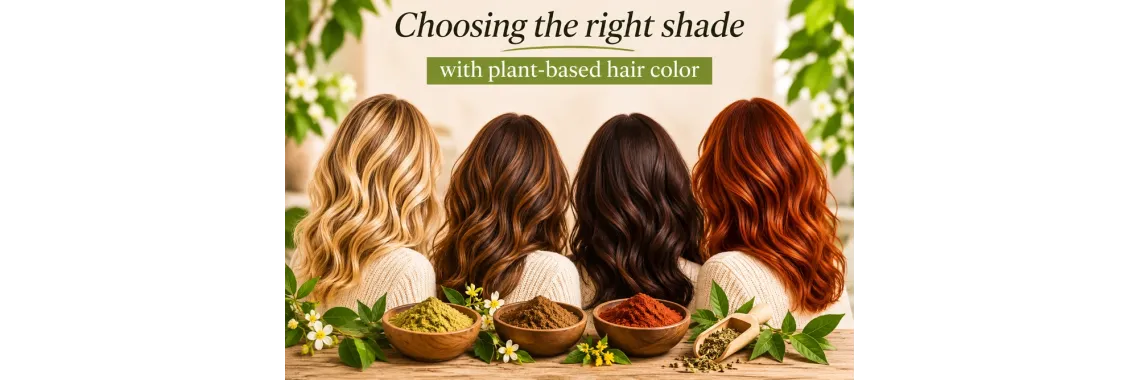
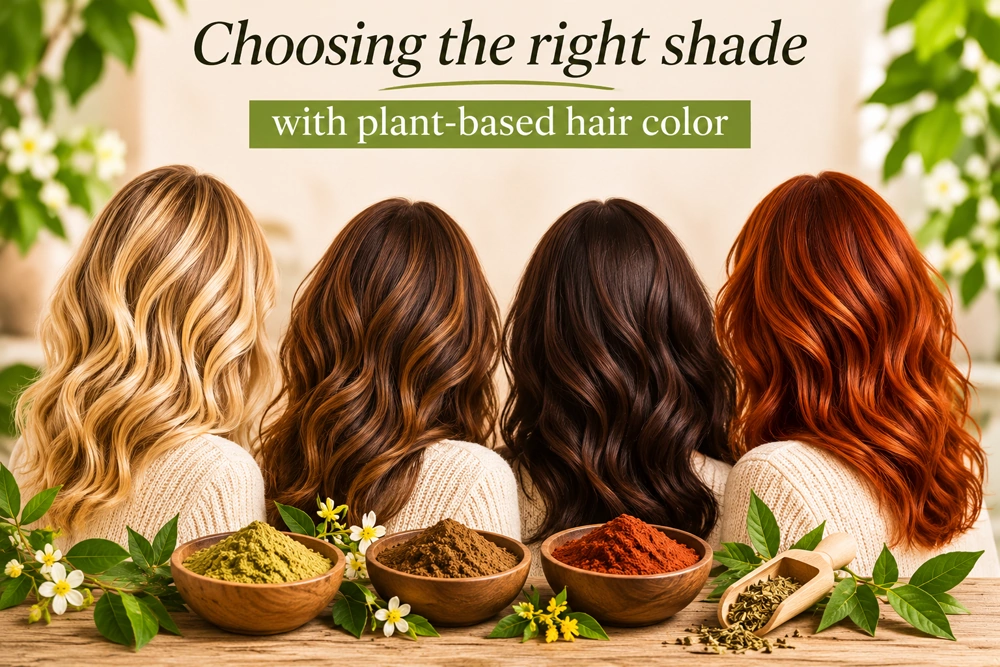
Golden blonde, light brown, brunette, mahogany or copper: with so many shades available, it is not always easy to know which plant-based hair color shade to choose.
With plant-based hair color, the final result does not depend only on the shade name written on the package. Your starting hair color, the presence of grey hair, your previous color treatments and the dye plants used in the blend all influence the result.
Before choosing a shade from our range of plant-based hair colors, it is therefore essential to understand how your starting base will interact with plant pigments.
With plant-based hair color, you are not simply choosing a color: you are choosing a result that needs to work with your starting base. The final shade depends on your current hair color, percentage of grey hair and the dye plants used.
Why is your starting hair color so important?
Plant-based hair color works differently from conventional oxidative color. Plant pigments deposit onto the hair fiber and visually combine with the color already present.
Your starting base therefore remains a major part of the final result.
The same plant-based hair color can produce:
- relatively subtle highlights on dark hair;
- a more visible color result on light hair;
- particularly luminous tones on grey hair.
This is why two people using exactly the same plant-based blend can achieve different results.
4 questions to ask before choosing your shade
Light blonde, dark blonde, brown, brunette or previously colored hair: your starting shade directly influences the result.
A few scattered grey hairs and predominantly grey hair may produce different results and can sometimes require different application methods.
Add brightness, warm up your color, go darker, cover grey hair or simply create new highlights.
Chemical color, bleaching, highlights and previous plant-based hair color should all be considered before changing shades.
Can plant-based hair color lighten your hair?
This is one of the most important points to understand before choosing a shade: traditional plant-based hair color does not bleach the hair.
It can add highlights, change the visual tone of your color, create warmer tones or darken your base, but it cannot transform brunette hair into light blonde hair in the same way as a lightening or bleaching process.
For example, applying a golden blonde plant-based hair color to a dark brown base will not turn the hair golden blonde. Depending on the formula and starting base, it may instead add subtle warm highlights.
If you would like to better understand the difference between the two approaches, read our guide Plant-Based Hair Color vs Chemical Hair Color: What’s the Difference?.
Which plant-based hair color should you choose for blonde hair?
Blonde bases generally allow plant pigments and highlights to appear particularly clearly.
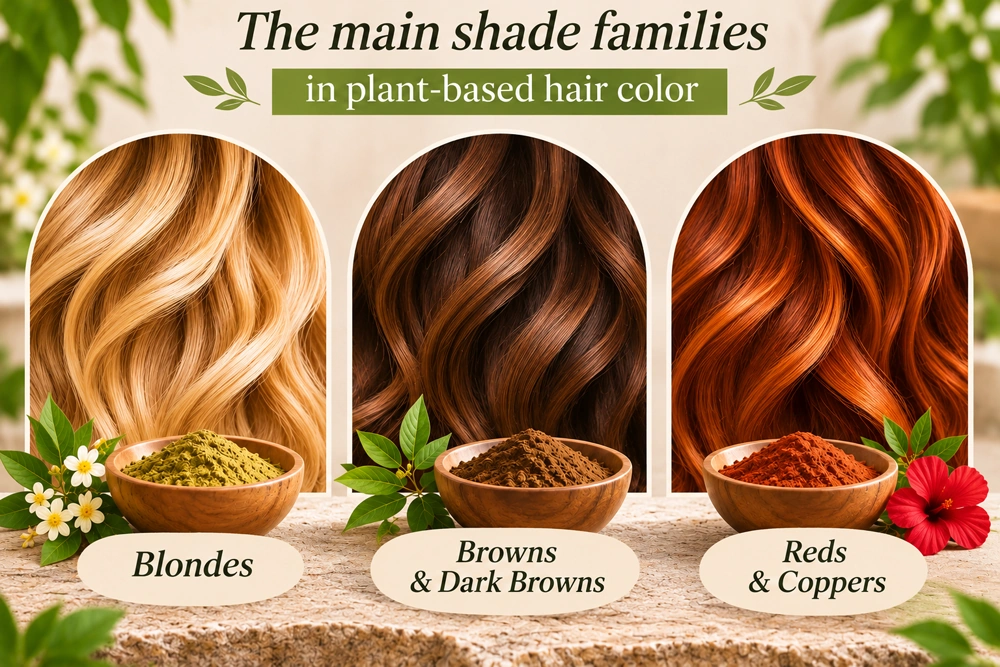
Depending on your starting shade and desired result, you may consider several color families:
- light blonde to refresh a light base;
- golden blonde for warmer, luminous highlights;
- ash blonde when the formula is designed to create a cooler-looking result;
- copper blonde or Venetian blonde for additional warmth;
- dark blonde to deepen a lighter base.
Explore our selection of plant-based blonde hair colors to compare the different shades available.
Which shade should you choose for brown or brunette hair?
On a brown base, plant-based hair color can help intensify the existing color, add depth or change the appearance of the highlights.
Depending on your goal, you may consider:
- light brown to maintain a relatively luminous result;
- hazelnut or cinnamon brown for warmer tones;
- dark brown to deepen the color;
- brunette or chocolate brown for greater depth;
- blends containing indigo when the goal is to create a darker result.
Discover our selection of plant-based Browns & Brunettes hair colors.
How can you achieve red, copper or mahogany tones?
Dye plants are particularly interesting when the goal is to create warm highlights.
Henna, in particular, is known for providing copper pigments. Depending on the other plants used in the blend, your starting base and the proportions of each ingredient, different shades can be achieved:
- golden copper;
- natural copper;
- intense copper;
- mahogany;
- copper red.
On light or grey hair, these pigments can appear especially bright. On darker bases, they are more likely to appear as highlights that become visible in the light.
Explore our plant-based Reds & Coppers hair colors.
What if you have grey hair?
Grey hair should be taken into account from the very beginning when choosing your shade.
Because grey strands contain little or no visible natural pigment, plant pigments may appear more intense on them than on naturally pigmented hair.
Hair containing both grey and naturally brown strands may therefore show different intensities of color after application. This can create a naturally multidimensional result.
For some brown or very dark shades, particularly when there is a high percentage of grey hair, a two-step application may be more suitable depending on the plant-based hair color used.
Explore our selection of plant-based hair colors for grey coverage.
For a more detailed explanation of coverage methods, read our guide Plant-Based Hair Color & Grey Hair: How to Get Good Coverage.
Choose your plant-based hair color according to your goal
| Your goal | Possible direction | What to remember |
|---|---|---|
| Refresh blonde hair | Light blonde, golden blonde or another shade suited to your base | Plant-based hair color does not bleach the hair |
| Add warm highlights | Golden, copper or mahogany tones | Highlights generally appear more clearly on lighter bases |
| Intensify brown hair | Brown, hazelnut or cinnamon brown | Choose according to the depth and tone you want |
| Darken your hair | Dark brown, brunette or blends containing indigo | Consider grey hair and previous color treatments |
| Cover grey hair | Choose according to the starting base and desired result | A one-step or two-step method may be used depending on the formula |
Can you choose a plant-based hair color based only on the shade name?
No. Two products with similar shade names can contain different combinations of dye plants.
A “brown” shade, for example, will not necessarily be identical from one brand to another. The ingredients, proportion of henna, presence of indigo and other plants can all influence the final result.
Before choosing a shade, check:
- the starting bases recommended by the manufacturer;
- the expected result on your current color;
- the instructions for grey hair;
- the composition of the plant blend;
- the recommended application method.
Why can a strand test be useful?
When trying a new shade or when your hair color history is complex, a strand test can help you observe the result before applying the product to your entire head of hair.
It can be particularly useful if:
- you are choosing between two shades;
- your lengths are already colored;
- you have highlights or bleached sections;
- your hair contains several different starting shades;
- you want a dark result on a high percentage of grey hair.
First plant-based hair color: should you choose a starter kit?
For a first application, choosing a solution that brings together the essentials needed for coloring can make the process easier to organize.
Our plant-based hair color starter kits bring together useful essentials for your first application.
The shade itself should still be chosen according to your starting base, any grey hair and the result you want to achieve.
Common mistakes when choosing your shade
❌ Choosing only from the result shown in a photograph
Photos can provide useful guidance, but your own starting base remains one of the main factors determining the final result.
❌ Choosing a blonde shade to lighten dark hair
Traditional plant-based hair color does not bleach your natural pigment.
❌ Forgetting to take grey hair into account
Grey strands may display different tones or require a specific application method depending on the shade you want.
❌ Automatically choosing a very dark shade for better grey coverage
Your shade should correspond to your desired result and starting base. Grey coverage does not depend simply on choosing the darkest possible color.
❌ Ignoring previous color treatments
Chemical color, bleaching and previous plant-based color are all part of your hair history and should be considered before changing shades.
Not sure which shade to choose?
It is not always easy to assess your starting base, percentage of grey hair and the most suitable shade on your own.
Natur’All Hair offers a personalized plant-based hair color consultation to help assess your current situation and guide you towards a suitable solution.
This can be particularly useful for your first plant-based hair color, when the hair has previously been chemically colored or when a high percentage of grey hair needs to be considered.
Natur’All Hair advice
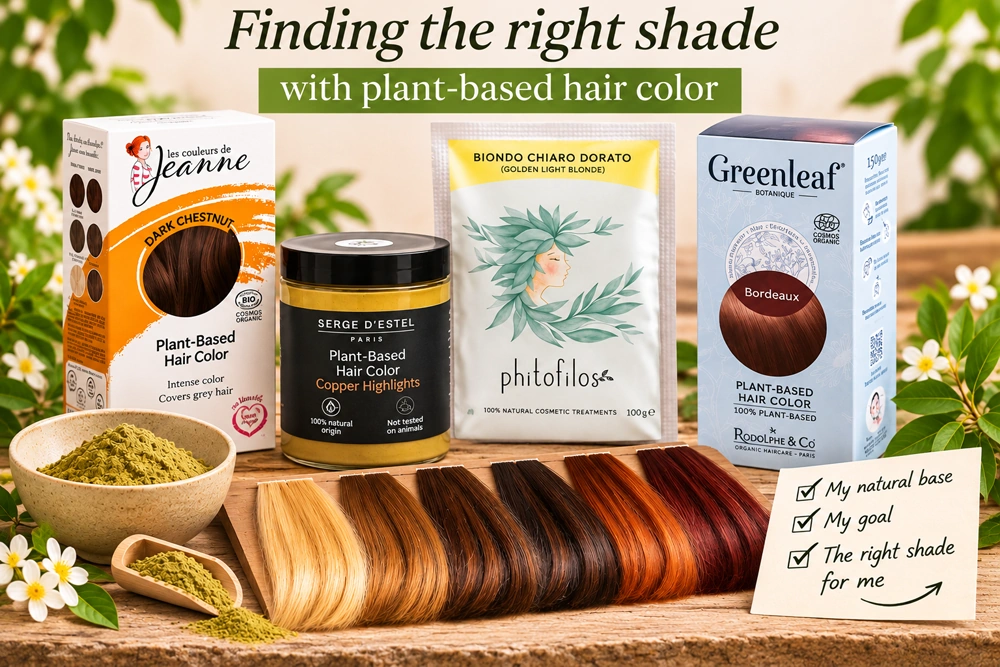
Before choosing your plant-based hair color, look at your hair in natural daylight and identify your true starting base at the roots. Also consider lighter areas, previously colored lengths and the percentage of grey hair.
If you are choosing between two possible results, you do not necessarily need to aim for the darkest shade immediately. With plant-based hair color, a progressive approach and a strand test can make choosing a shade easier, particularly for a first application.
FAQ – Choosing your plant-based hair color shade
Which plant-based hair color should I choose for my first application?
Choose a shade that is compatible with your starting color and your goal. If you mainly want to add highlights, staying relatively close to your natural base can make the result easier to anticipate. Your percentage of grey hair should also be considered.
Can I go from brunette to blonde with plant-based hair color?
Not with traditional plant-based hair color alone. Plant pigments do not bleach the hair’s natural pigmentation. They add pigments and highlights to the existing base.
Which shade should I choose to cover grey hair?
There is no single shade suitable for every type of grey hair. The choice depends on your natural color, percentage of grey hair and desired result. Some darker shades may require a two-step method.
Can different plant-based hair color shades be mixed?
Some ranges allow different plant powders or shades to be combined, but it is important to follow the manufacturer’s instructions. Changing the proportions can significantly affect the final result.
Why does my hair color look different from the color shown on the product?
Because plant-based hair color visually combines with your starting shade. Grey hair, your previous color history, the plants used and the application method can also influence the result.
How can I know which shade will suit me best?
Start by assessing your natural base, percentage of grey hair and desired result. Also take previous color treatments into account. If you are unsure, a strand test or our personalized plant-based hair color consultation can help guide your choice.
In summary
To choose the right plant-based hair color shade:
- Identify your true starting hair color.
- Estimate your percentage of grey hair.
- Define your goal: add highlights, intensify, darken or cover grey hair.
- Remember that traditional plant-based hair color cannot lighten a naturally dark base.
- Check the recommendations for each specific plant blend.
- Perform a strand test or ask for advice when the result is difficult to predict.
Explore all our plant-based hair colors or complete the Natur’All Hair personalized plant-based hair color consultation to help identify a solution that fits your starting base, percentage of grey hair and desired result.
Comments
Write a comment