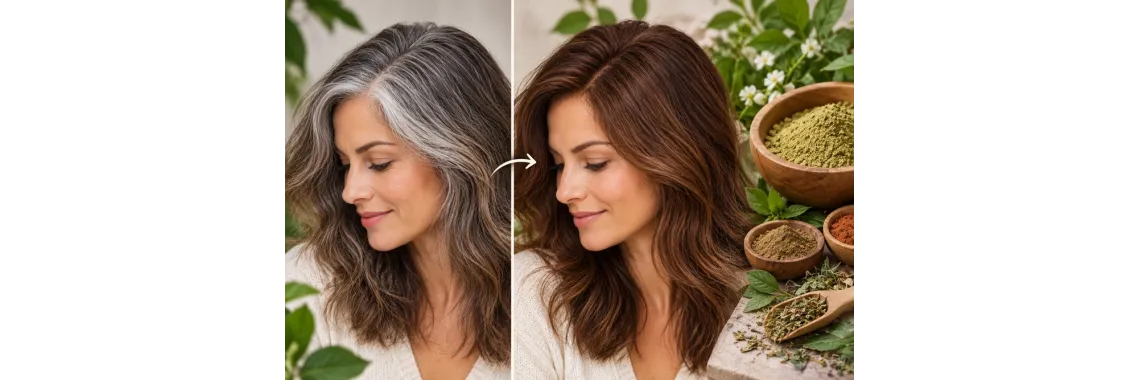
Would you like to cover your grey hair with plant-based hair color but are unsure which shade to choose or whether you need a one-step or two-step application? Unlike conventional hair color, the result of plant-based hair color depends strongly on your starting shade, the percentage of grey hair and the dye plants used.
Henna, indigo and other dye plants can create a wide range of shades, from golden blonde and copper to brown and darker tones. However, the same formula will not produce exactly the same result on brown, blonde or fully grey hair.
To achieve harmonious coverage, it is therefore important to understand how plant pigments behave on grey hair and when a one-step or two-step application may be more suitable.
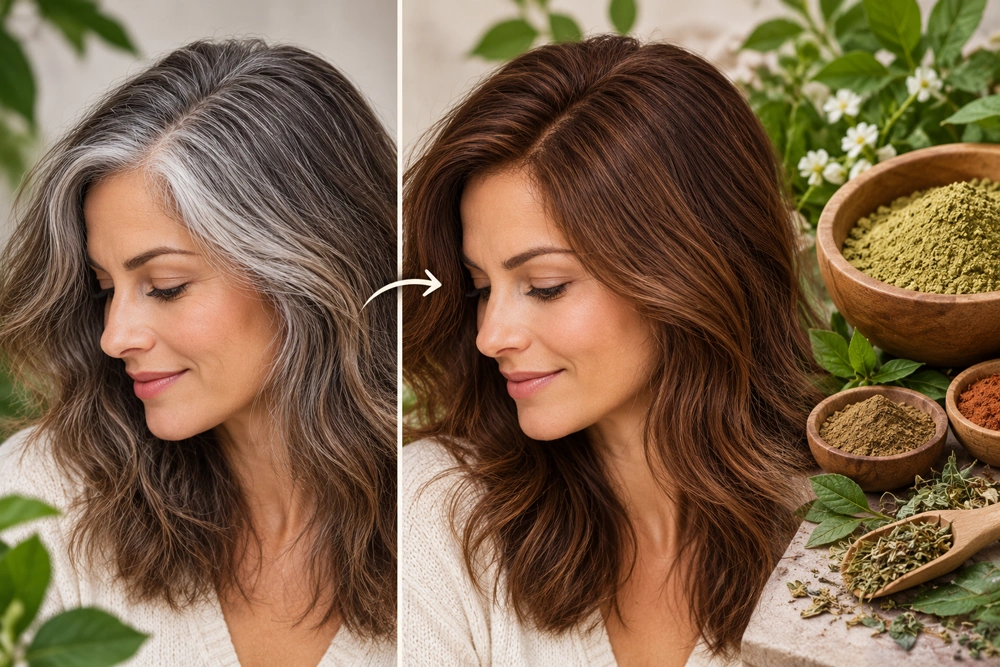
Grey hair can be colored with dye plants, but the result depends on your starting base, percentage of grey hair, desired shade and application method. For some darker shades, a two-step application may be preferable.
Why does grey hair react differently to plant-based hair color?
Grey hair contains little or no visible natural pigment. As a result, the pigments provided by dye plants often appear more clearly than they do on naturally pigmented hair.
For example, a plant that creates copper tones may look relatively subtle on dark brown hair but much brighter on a grey strand.
This is why plant-based hair color often creates a multidimensional and nuanced result when the hair contains both grey and naturally pigmented strands.
What determines grey hair coverage?
Several factors should be considered before choosing your plant-based hair color.
A few scattered grey hairs and predominantly grey hair do not always require the same approach.
The final shade results from the combination of the existing base and the pigments provided by the plants.
Golden blonde, copper, brown and dark brown shades do not require the same plants or the same application method.
Depending on the goal, a one-step application may be sufficient or a two-step method may be more suitable.
What does henna do on grey hair?
Henna is one of the most important dye plants used in plant-based hair color. It naturally provides warm pigments that generally range from copper to reddish tones depending on the starting base and the blend used.
On grey hair, henna therefore tends to appear much brighter than on dark hair.
Henna also plays an important role when the goal is to achieve brown or very dark shades. It can create a first warm pigment base onto which other plants, particularly indigo, can then be applied.
What does indigo do?
Indigo is used to bring cooler and darker pigments. Combined with henna in different proportions or used in a second step, it can help create brown, dark brown or very dark shades.
Indigo is therefore not simply an alternative to henna. The two plants play complementary roles when the goal is to achieve a darker result on grey or very light hair.
One-step or two-step plant-based hair color: what is the difference?
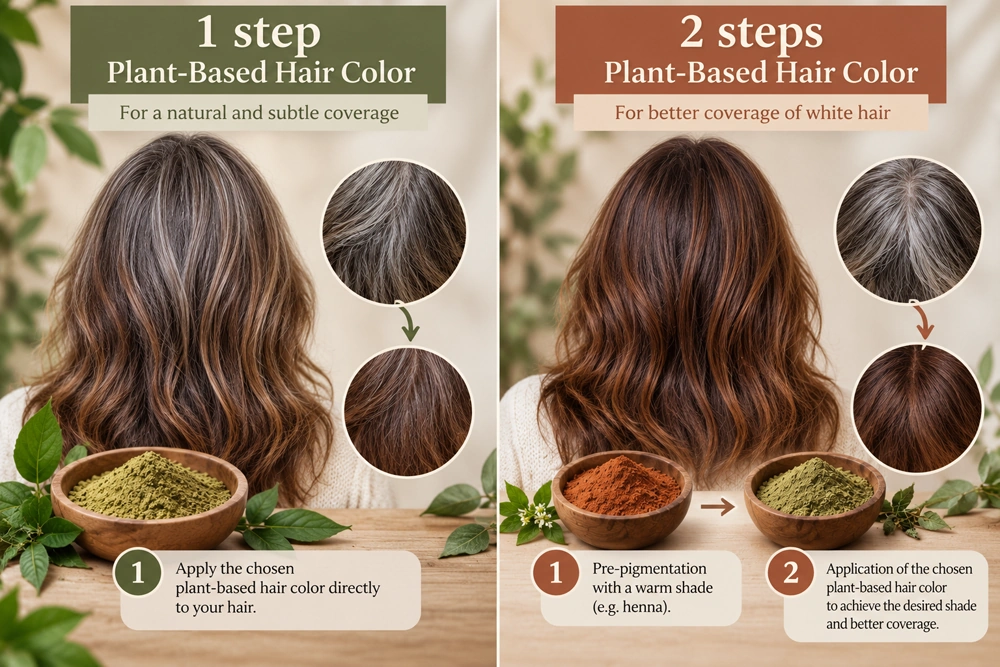
One-step application
With a one-step application, the different dye plants needed for the desired shade are used during a single coloring session.
This method may work well in many situations, including:
- adding reflects;
- creating blonde, golden or copper tones depending on the starting shade;
- achieving certain brown shades;
- when the percentage of grey hair and the formula allow the desired result in one application.
Two-step application
For some darker shades or when there is a high percentage of grey hair, a two-step method may be recommended.
The principle generally involves:
- creating a first warm pigment base, often with henna;
- applying a second darker blend, which may contain indigo.
This method allows the color to be built gradually rather than trying to achieve a very dark shade directly on grey hair.
Which method should you choose for your desired shade?
| Desired result | Possible approach | What to consider |
|---|---|---|
| Blonde / golden | Blends suited to light bases and grey hair | The result depends strongly on the base and plants used |
| Copper | Henna or a warm-dominant blend | Grey hairs may appear brighter |
| Brown | Combination of warm and darker dye plants | One or two steps depending on the formula and grey hair percentage |
| Dark brown / very dark | A two-step method is often relevant | A first warm base can help achieve a darker result |
These are general guidelines. The exact method depends on the formula used, the brand’s instructions and the initial condition of the hair.
Can grey and pigmented hair end up exactly the same color?
Not always, and this is an important characteristic of plant-based hair color.
Because plant pigments layer over the existing hair color, grey strands may remain slightly brighter or show stronger reflects than naturally darker strands.
This contrast can create an effect similar to natural highlights rather than a completely uniform color.
If your goal is a result that is as even as possible, the choice of formula, application method and possibly repeated applications becomes especially important.
Why may plant-based hair color take less evenly on some grey hair?
Several factors can influence the result:
- very resistant or low-porosity hair;
- product buildup or film-forming residues;
- unsuitable hair preparation;
- a blend that does not match the desired shade;
- insufficient processing time for the formula used;
- an application that is too light or uneven at the roots.
It is therefore important to follow the instructions for the specific plant-based hair color rather than using one universal method for every powder.
Should you prepare your hair before plant-based hair color?
Preparation depends mainly on your hair history and the products you usually use.
The aim is generally to apply the color to hair that is sufficiently clean and free from significant buildup that could interfere with contact between the plant pigments and the hair fiber.
If you regularly use highly film-forming products, or if you are transitioning from conventional hair care to plant-based hair color, a clarifying step may sometimes be useful.
This topic will be covered in more detail in our guide on how to prepare your hair before plant-based hair color.
Common mistakes when covering grey hair
❌ Choosing a shade based only on the picture on the packaging
The final color depends on your starting base. The same plant-based hair color can look different on a grey strand and on naturally brown hair.
❌ Trying to achieve a very dark brown directly on a high percentage of grey hair
Depending on the formula, a two-step method may be more suitable in order to create a warm pigment base first.
❌ Using indigo alone without considering the starting base
Indigo is an important dye plant for darker shades, but it needs to be used according to the starting color and desired result.
❌ Neglecting the roots
Grey hair is often particularly visible around the roots and temples. A sufficiently generous and even application is important.
❌ Judging the final result immediately after rinsing
With some plant-based hair colors, the shade can continue to evolve after application. It is therefore best to follow the product-specific instructions before assessing the final result.
How should you maintain plant-based hair color on grey hair?
Once you have achieved the desired color, maintenance depends on your regrowth rate, chosen shade and hair care routine.
You can, for example:
- choose a gentle shampoo suited to your scalp;
- avoid unnecessary washing when possible;
- adapt treatments to the needs of your lengths;
- focus root touch-ups mainly on new growth when the lengths do not need recoloring;
- follow the specific recommendations for your plant-based hair color.
How do you choose plant-based hair color for grey hair?
Start by identifying:
- your natural hair color;
- your approximate percentage of grey hair;
- the shade you want to achieve;
- your previous hair color history;
- whether you are comfortable with a one-step or two-step application if needed.
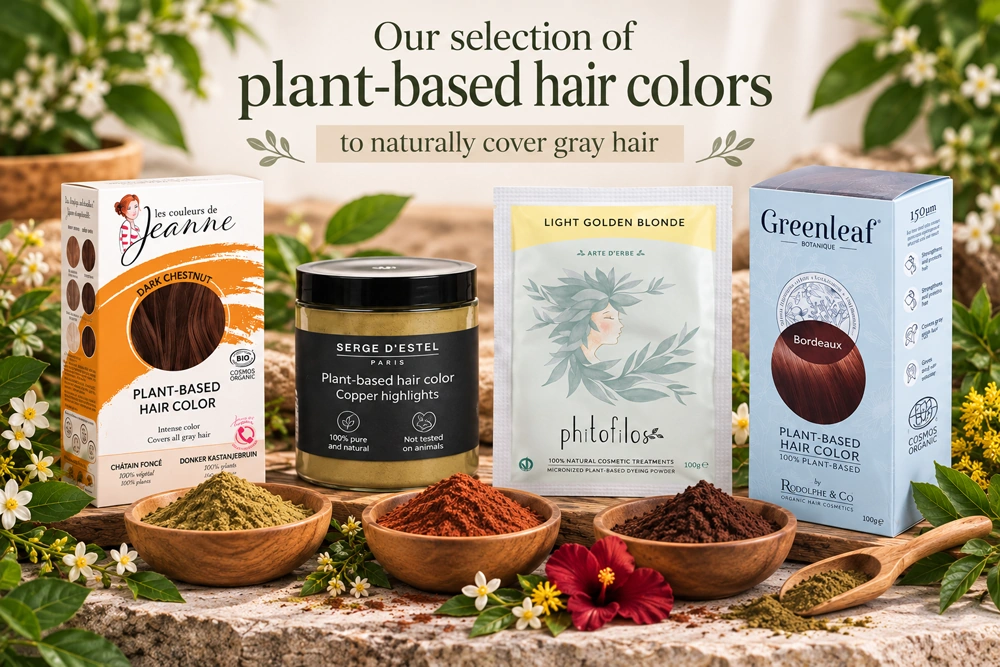
You can then explore our selection of plant-based hair colors and the different shades available.
Natur’All Hair advice
When you have grey hair, do not choose your plant-based hair color only according to the shade you want to see on your lengths. Always start by looking at your natural base and the proportion of grey hair, as these strongly influence the final result.
For a first plant-based hair color, a high percentage of grey hair or a darker shade, it may be helpful to use a progressive approach and perform a strand test when the result is uncertain.
FAQ – Plant-based hair color and grey hair
Can plant-based hair color cover grey hair?
Yes. Dye plants can color grey hair. However, the result depends on the starting shade, plants used, percentage of grey hair and desired color.
Can grey hair be covered in one application?
Yes, in many situations. Some shades can be achieved in one application. For very dark colors or certain grey hair profiles, however, a two-step method may be more suitable.
Why does henna look copper on grey hair?
Henna naturally provides warm pigments. Because grey hair no longer contains the same natural pigmentation as brown or dark hair, these pigments generally appear much more visible and brighter.
Why use indigo after henna?
For some darker shades, henna creates a first warm pigment base while indigo adds darker pigments in a second step. This combination can help create brown, dark brown or very dark shades.
How often should you touch up grey roots?
The frequency mainly depends on your hair growth rate and the contrast between the grey regrowth and the colored lengths. Touch-ups can focus mainly on new roots when the lengths do not need recoloring.
In summary
For successful plant-based hair color on grey hair, remember these key points:
- The result depends on your starting shade and percentage of grey hair.
- Henna provides a warm pigment base that is especially visible on grey hair.
- Indigo helps create darker shades when used with the appropriate method.
- A two-step application can be useful for some darker shades.
- Choosing the right method is just as important as choosing the shade.
Explore Natur’All Hair plant-based hair colors and our upcoming guides on choosing your shade, preparing your hair and maintaining your color.
Comments
Write a comment