Are you hesitating between plant-based hair color and chemical hair color? Both techniques can change the appearance of your hair color, but they work differently and do not offer the same possibilities.
Chemical hair color can allow significant color transformations, including lightening with certain formulas. Plant-based hair color, on the other hand, relies on dye plants such as henna and indigo and works mainly by depositing pigments onto the hair fiber.
So, what are the real differences between plant-based and chemical hair color? Grey hair coverage, lightening, finish, maintenance and transition: here are the key points to understand before choosing the option best suited to your hair and your desired result.
Plant-based and chemical hair color do not meet the same needs. Plant-based color is mainly used to deepen the color, add reflects and cover grey hair, while some chemical hair colors can also lighten or significantly alter the natural hair color.
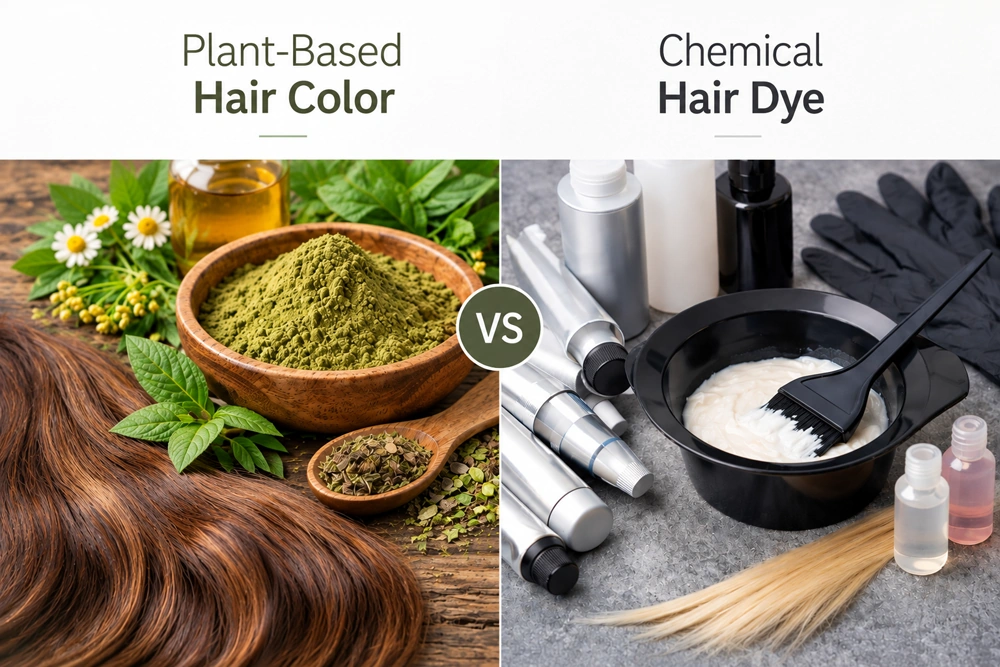
Plant-based and chemical hair color: how do they work?
The main difference between these two methods lies in how they interact with the hair.
How does chemical hair color work?
Oxidative hair colors generally use a combination of alkaline agents, oxidizing agents and color precursors. Depending on the product, this process can alter the hair’s natural pigments and allow new color molecules to form within the hair fiber.
This technology can be used to:
- darken the hair;
- significantly change the natural shade;
- cover grey hair;
- and, with certain formulas, lighten the natural base.
The result can be very precise and uniform. However, oxidative processes may also make the hair fiber more sensitive, particularly when repeated or combined with lightening techniques.
How does plant-based hair color work?
Plant-based hair color mainly uses powders made from dye plants. Some of the best-known include:
- henna;
- indigo;
- cassia;
- and other plants used to adjust or enhance different shades.
The pigments from these plants bind mainly to the hair fiber and interact with the hair’s existing color. The final result therefore depends strongly on the starting shade, the percentage of grey hair, the plants used and previous color applications.
Unlike oxidative hair color, plant-based hair color does not lighten the hair’s natural melanin. It is mainly used to add reflects, darken the hair or cover grey hair.
The main differences between plant-based and chemical hair color
Some chemical hair colors can lighten the hair. Plant-based hair color cannot lighten the natural hair color.
Both techniques can cover grey hair, but the method and final result differ.
Plant-based color generally gives a more nuanced result that depends more strongly on the starting shade.
Plant-based hair color relies on dye plants, while conventional hair colors use different chemical systems depending on their technology.
Comparison table: plant-based or chemical hair color?
| Criteria | Plant-based hair color | Chemical hair color |
|---|---|---|
| Main process | Dye plants | Varies according to the type of hair color |
| Lightening | No | Possible with certain techniques |
| Darkening | Yes | Yes |
| Grey hair | Yes, depending on the formula and method | Yes, depending on the type of hair color |
| Result | Nuanced and dependent on the starting color | Often more predictable and uniform |
| Major color transformation | Limited | Possible depending on the technique |
Can plant-based hair color lighten your hair?
This is one of the most important differences to understand.
Plant-based hair color cannot lighten the natural hair color. Plant pigments add color or deepen the existing shade, but they do not remove the natural pigments already present in the hair fiber.
For example, naturally brown hair cannot become blonde using plant-based hair color alone.
However, on grey or very light hair, certain plants can create blonde, golden, copper or darker reflects depending on the blend used.
Plant-based hair color and grey hair: what should you know?
Plant-based hair color can be particularly useful for people who want to color grey hair with dye plants.
The final result depends on several factors:
- the percentage of grey hair;
- the natural color of the lengths;
- the desired shade;
- the plants used;
- the processing time;
- the hair color history.
For some darker shades and certain percentages of grey hair, a two-step application may be necessary: a first step based on henna followed by a second blend containing indigo.
Grey hairs may also remain slightly brighter than naturally pigmented hairs, which can create a more nuanced overall result.
Can you switch from chemical to plant-based hair color?
Yes. In many cases, it is possible to transition from conventional hair color to plant-based hair color.
The transition should nevertheless take your hair history into account, including:
- previous permanent hair colors;
- bleaching;
- highlights or balayage;
- straightening or other chemical treatments;
- the condition and porosity of the hair fiber.
Plant-based hair color applied to bleached or very light lengths may behave differently from an application on natural hair. The formula therefore needs to take into account the actual base present on the hair.
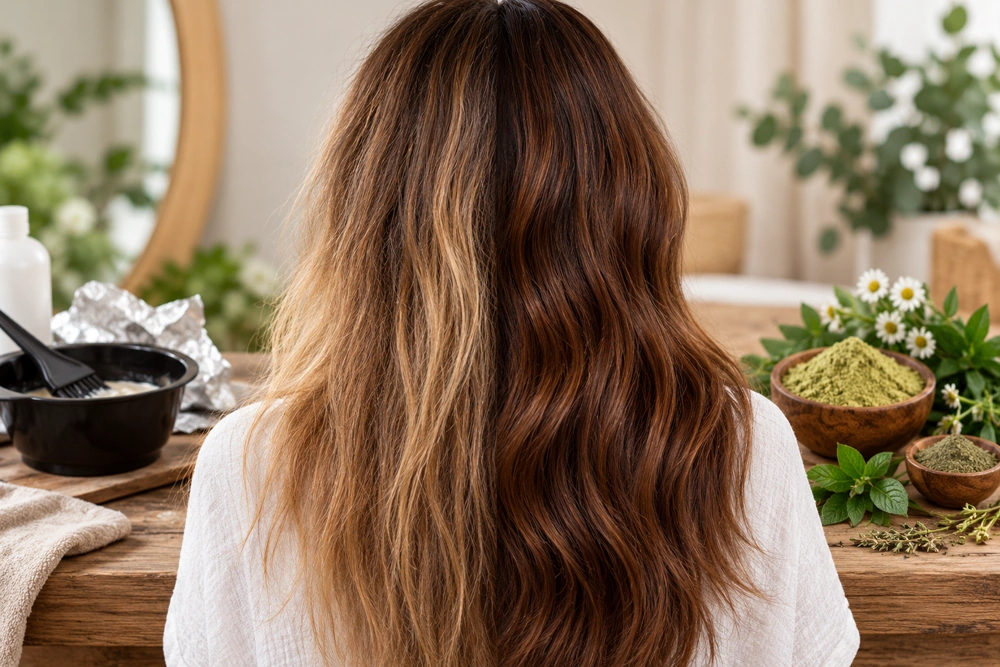
Benefits and limitations of plant-based hair color
Main benefits
- it mainly uses dye plants;
- it can cover grey hair;
- it creates reflects that combine with the starting hair color;
- it does not require chemical lightening of the hair fiber to deposit pigments;
- it can create a natural-looking and nuanced result.
Main limitations
- it cannot lighten the hair;
- some color transformations are not possible or may require several applications;
- the result depends more strongly on the starting shade;
- very dark shades on grey hair may require a two-step method;
- making a major color change after repeated plant-based applications can be more complex.
Benefits and limitations of chemical hair color
Main benefits
- it allows a wide range of color transformations;
- certain techniques can lighten the hair;
- it can provide very precise and reproducible results;
- it can effectively cover grey hair depending on the formula used.
Main limitations
- oxidative processes can make the hair fiber more sensitive;
- repeated lightening can increase hair porosity and fragility;
- the lengths may require additional care depending on the techniques performed.
Which hair color should you choose for your goal?
The best choice depends mainly on the result you want to achieve.
You want to lighten your hair
Plant-based hair color will not lighten your natural base. A conventional technique will be necessary if your goal requires removing some of the hair’s natural pigment.
You want to cover grey hair with plant-based color
Plant-based hair color can be an interesting option, provided the plants and application method are suited to the desired result.
You want to darken your hair slightly or add reflects
Plant-based hair color can create copper, golden, brown or darker shades depending on your starting color and the plants used.
You want to make a major color change
Chemical hair color generally provides more possibilities when the desired result involves a significant change in depth or substantial lightening.
Common mistakes to avoid with plant-based hair color
❌ Choosing a shade based only on the picture on the packaging
The result of plant-based hair color depends strongly on your starting shade. The same blend can produce different results depending on the natural base and percentage of grey hair.
❌ Assuming plant-based hair color can lighten the hair
Plant-based hair color adds pigments but does not remove the hair’s natural melanin.
❌ Ignoring your previous hair color history
Previous bleaching, highlights or chemical treatments can affect how plant pigments deposit on the hair.
❌ Using indigo alone on very grey or very light hair without understanding the possible result
Depending on the starting base and formula, indigo can produce unwanted reflects. Choosing the right blend and method is therefore essential.
❌ Expecting exactly the same result as chemical hair color
Plant-based hair color interacts with the starting shade. The result is often more nuanced and less uniform than oxidative hair color.
How should you maintain plant-based hair color?
After plant-based hair color, a simple routine adapted to your hair’s actual needs is generally sufficient.
You can, for example:
- use a gentle shampoo suited to your scalp;
- choose a conditioner when the lengths need additional detangling and softness;
- use a hair mask when the lengths need deeper care;
- adjust the frequency of treatments according to the actual needs of your hair.
You can also discover our selection of plant-based hair colors to find a shade suited to your color project.

Natur’All Hair advice
Before choosing plant-based hair color, always start from your actual hair color and your previous color history. The final result depends just as much on your starting base as on the blend you use.
For grey hair, darker shades or previously bleached hair, it may be useful to think in several steps rather than simply choosing a shade from a color chart.
FAQ – Plant-based vs chemical hair color
What is the main difference between plant-based and chemical hair color?
Plant-based hair color uses pigments from dye plants that bind mainly to the hair fiber and combine with the starting shade. Chemical hair colors use different systems depending on their technology and, in some cases, can modify the hair’s natural pigments more extensively.
Can plant-based hair color lighten hair?
No. Plant-based hair color can add reflects or darken the hair, but it cannot lighten the natural hair color.
Can plant-based hair color cover grey hair?
Yes. Plant-based hair color can cover grey hair. However, the result depends on the desired shade, percentage of grey hair, starting color and plants used. Some darker shades may require a two-step application.
Does plant-based hair color damage the hair?
Plant-based hair color does not rely on the same oxidative mechanism as conventional permanent hair color. However, this does not mean that every plant-based formula is automatically suitable for everyone: the plants used, frequency of application and condition of the scalp should also be considered.
Can you use plant-based hair color after chemical hair color?
Yes, in many cases. However, previous bleaching, highlights or other chemical treatments should be taken into account. The result can vary depending on the porosity and color already present on the lengths.
In summary
When choosing between plant-based and chemical hair color, remember these four key points:
- Plant-based hair color cannot lighten the hair, but it can add reflects, darken the hair and cover grey hair.
- Chemical hair color offers more possibilities for major transformations, particularly when lightening is required.
- The result of plant-based hair color depends strongly on the starting shade, percentage of grey hair and plants used.
- The right choice depends mainly on your desired result and previous hair color history.
Discover our selection of plant-based hair colors and Natur’All Hair advice to help you choose your shade, prepare your hair and maintain your color.
Comments
Write a comment