Herbal hair dye vs chemical hair dye: what are the differences?
By Natur'All Hair - 13/03/2026 - 0 comments
Changing your hair color has become very common, but not all hair coloring methods work the same way. Between herbal hair dye and chemical hair dye, the differences are significant, both in their composition and in their effects on the hair fiber.
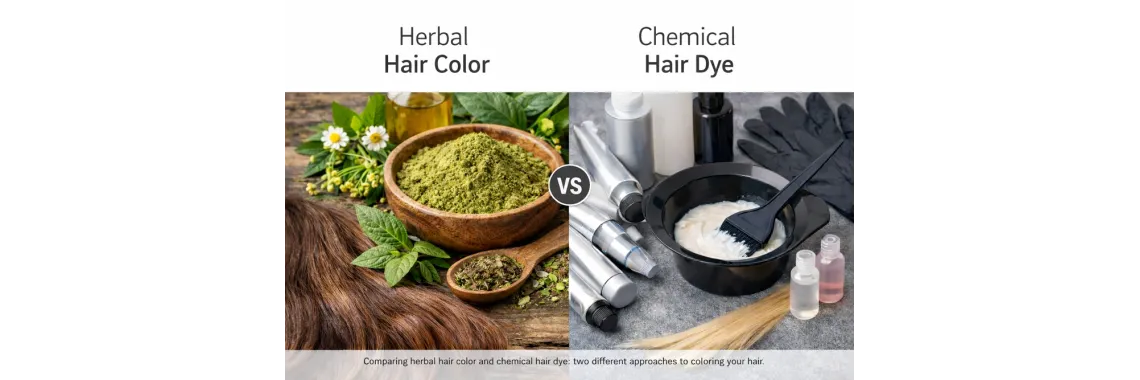
Chemical hair dye is often chosen for its fast results and its ability to dramatically lighten or transform hair color. Herbal hair dye, on the other hand, is increasingly popular for its natural approach, luminous results, and its respect for the hair structure.
So what exactly is the difference between herbal hair dye and chemical hair dye? Which option should you choose depending on your needs, your hair type, and the result you want? Here is a complete guide to better understand their differences and adopt the right routine for healthy colored hair.
Why these two types of hair dye are different
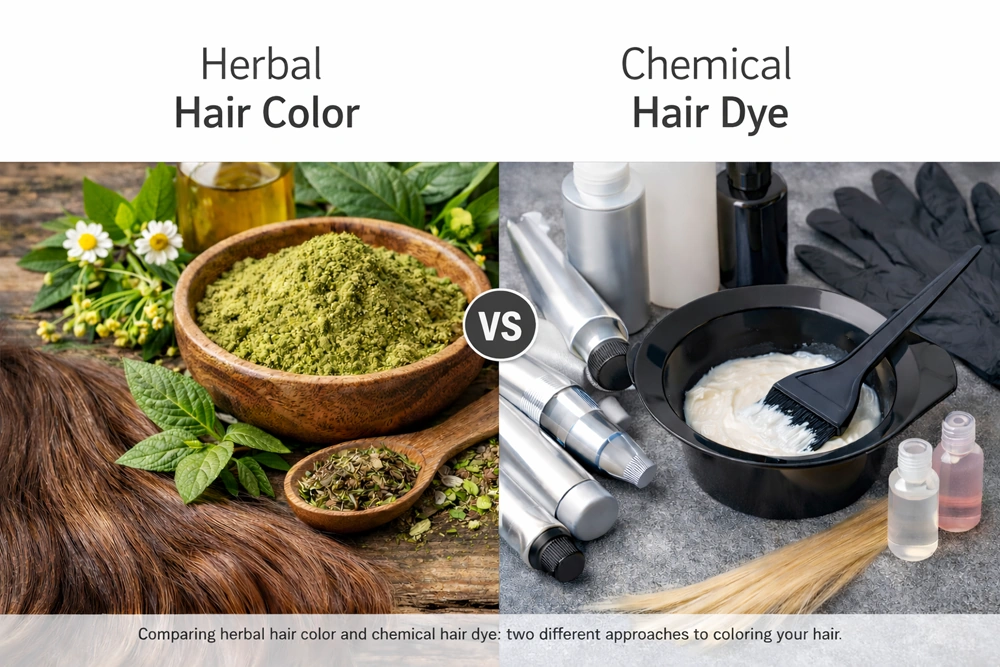
The main difference between herbal hair dye and chemical hair dye lies in the way they interact with the hair structure.
Chemical hair dye works by opening the hair cuticle so artificial pigments can penetrate deep into the hair fiber. This allows major color transformations such as lightening, darkening or fully covering gray hair. However, repeated use can weaken the hair fiber.
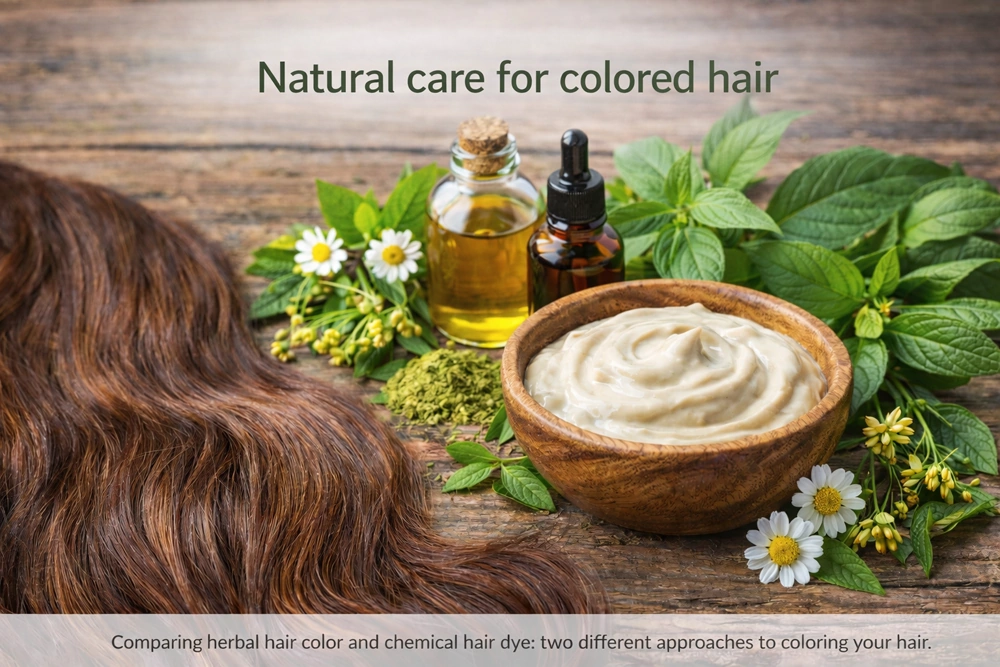
Herbal hair dye, on the other hand, is made from plant powders such as henna, indigo, cassia and other botanical extracts. Instead of penetrating the hair fiber, these natural pigments coat the hair shaft like a protective layer. The result is often more natural, shinier and softer hair.
In short, chemical hair dye aims to transform the hair color from within, while herbal hair dye coats and protects the hair fiber.
Step 1: shampoo
Whether you choose herbal hair dye or chemical hair dye, shampoo is the foundation of a good hair care routine. After coloring your hair, gentle cleansing helps maintain color vibrancy while preserving scalp balance.
Harsh shampoos can dry the hair fiber, reduce shine and weaken the hair over time. Using a gentle shampoo is therefore recommended to keep the hair healthy and maintain color.
A suitable shampoo helps to:
- cleanse the hair gently
- maintain color vibrancy
- reduce dryness in the lengths
- keep hair soft and shiny
To maintain colored hair, you can incorporate a gentle shampoo into your hair care routine.
Step 2: nourish and repair
After coloring, the hair often needs nourishment and repair. This is especially true after chemical coloring, which can make hair more porous, dry or fragile. However, even after herbal hair dye, nourishing treatments help keep hair soft and healthy.
Applying a nourishing hair mask regularly helps strengthen the hair fiber and maintain beautiful color.
A good nourishing treatment can:
- restore softness
- reduce dryness
- improve hair flexibility
- maintain shine and smoothness
You can complement your routine with a nourishing hair mask to help strengthen and repair colored hair.
Step 3: protect the hair
Colored hair, whether treated with herbal hair dye or chemical dye, can be sensitive to external aggressions. Heat styling tools such as blow dryers, straighteners or curling irons can weaken the hair fiber and reduce shine.
Using a protective treatment before styling helps maintain healthy hair and prevent damage.
In a colored hair routine, a heat protection spray helps protect the hair from heat and preserve the quality of the fiber.
Complete routine
To maintain beautiful color and healthy hair, it is best to adopt a simple and consistent hair care routine.
A complete routine may include:
- using a gentle shampoo
- applying a nourishing mask once or twice per week
- protecting hair before heat styling
- spacing out washes to maintain color
To go further, you can discover a complete routine designed to maintain herbal hair dyed hair.

Additional tips
To maintain healthy hair after coloring, a few simple habits can make a big difference.
- Avoid washing hair too frequently
- Use gentle and nourishing hair care products
- Protect hair from excessive sun exposure
- Limit the use of heat styling tools
- Adapt treatments to your hair's specific needs
Conclusion
Herbal hair dye and chemical hair dye meet different needs. Herbal hair dye focuses on plant ingredients, natural shine and protecting the hair fiber. Chemical dye allows stronger color transformations but may weaken the hair structure with repeated use.
Understanding the difference between herbal hair dye and chemical hair dye helps you choose the method that best suits your hair and maintain healthy, beautiful hair.
Hair care essentials
FAQ
What is the difference between herbal hair dye and chemical hair dye?
Chemical hair dye changes the hair color by penetrating the hair fiber, while herbal hair dye coats the hair with natural plant pigments.
Does herbal hair dye damage hair?
Herbal hair dye is generally considered gentler because it does not alter the hair structure and can even improve shine and strength.
Can herbal hair dye cover gray hair?
Yes, herbal hair dye can cover gray hair depending on the plant mixture used and the natural base color of the hair.
Does chemical hair dye last longer?
Chemical hair dye often creates more intense color changes and can last longer depending on the formulation.
What routine should be followed after coloring hair?
After coloring your hair, it is recommended to use a gentle shampoo, a nourishing hair mask and a heat protection spray to maintain color and hair health.
Tags: herbal hair dye, chemical hair dye, herbal hair color, natural hair dye, plant based hair dye, herbal vs chemical hair dye
Comments
Write a comment