
Is your hair dry, dull, rough or difficult to detangle? Dry hair can have several causes, including your natural hair type, limited sebum distribution along the lengths, repeated heat exposure, chemical treatments, sun exposure or unsuitable styling habits.
A natural hair care routine for dry hair should mainly aim to preserve the hair fiber, improve softness and flexibility, and limit the factors that can make dryness worse.
Shampoo, masks, oils and heat protection: discover how to build a simple routine suited to dry hair without unnecessarily multiplying products.
Dry hair does not always have the same needs. An effective routine generally combines gentle cleansing, suitable care for the lengths and habits that help limit dryness and weakening of the hair fiber.
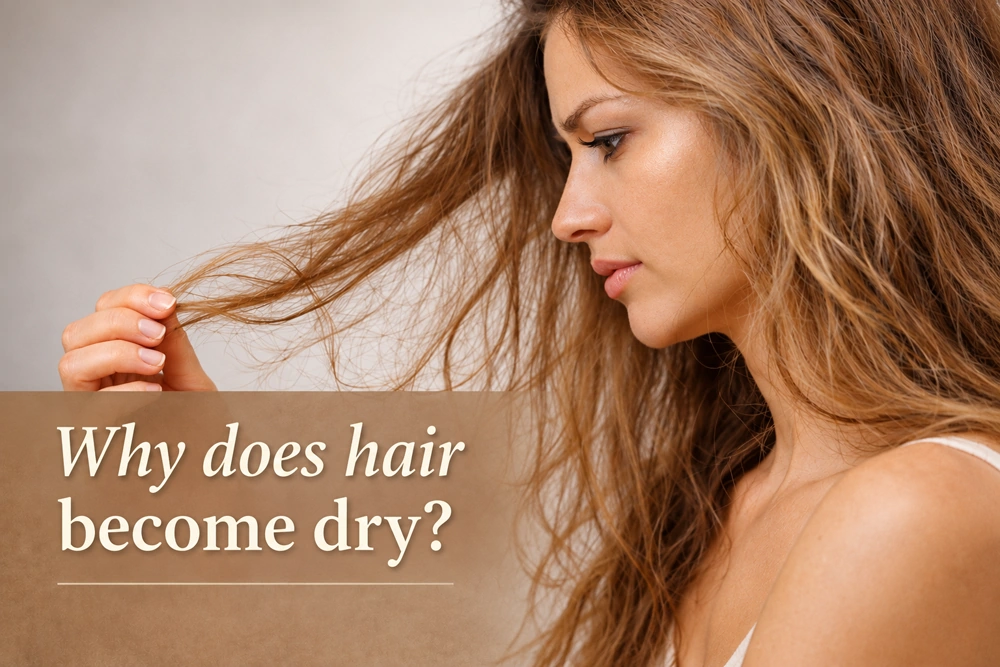
Why does hair become dry?
Dry hair generally lacks softness and flexibility and may feel rougher, appear frizzier or be more prone to breakage.
Dryness can be linked to the natural characteristics of the hair. Sebum produced by the scalp may, for example, spread less easily along the lengths when the hair is long, wavy, curly or coily.
Other factors can also make dryness more noticeable:
- very frequent washing with unsuitable products;
- repeated use of heated styling tools;
- bleaching and certain chemical treatments;
- sun, wind, chlorine or seawater;
- repeated friction on the lengths;
- a routine that is either too rich or not sufficiently adapted to the hair’s needs.
Dry hair: hydration, nourishment or repair?
These three terms are often used together, but they do not describe exactly the same thing.
Humectants and conditioning ingredients can help improve the softness and feel of the hair.
Oils and fatty ingredients can help soften the lengths and reduce the feeling of dryness.
Proteins and certain conditioning ingredients can temporarily improve the appearance and mechanical resistance of sensitized hair.
Hair may benefit from more than one of these approaches. The aim is therefore not to automatically choose the richest treatment, but to observe how your lengths respond.
Step 1: cleanse without making dryness worse
Shampoo should primarily cleanse the scalp. When the lengths are dry, it is generally better to avoid rubbing them vigorously during washing.
You can choose a natural shampoo suited to your scalp and washing frequency.
A few simple habits can also help:
- apply shampoo mainly to the scalp;
- massage gently without scratching;
- allow the foam to run through the lengths while rinsing rather than rubbing them;
- use lukewarm rather than very hot water.
Step 2: choose suitable care for the lengths
After shampooing, dry hair often benefits from a conditioner or mask that can help improve softness, flexibility and manageability.
A conditioner can be used regularly when the hair mainly needs detangling and softness.
A hair mask can be added when the lengths need richer care.
Depending on your hair, you may look for formulas containing:
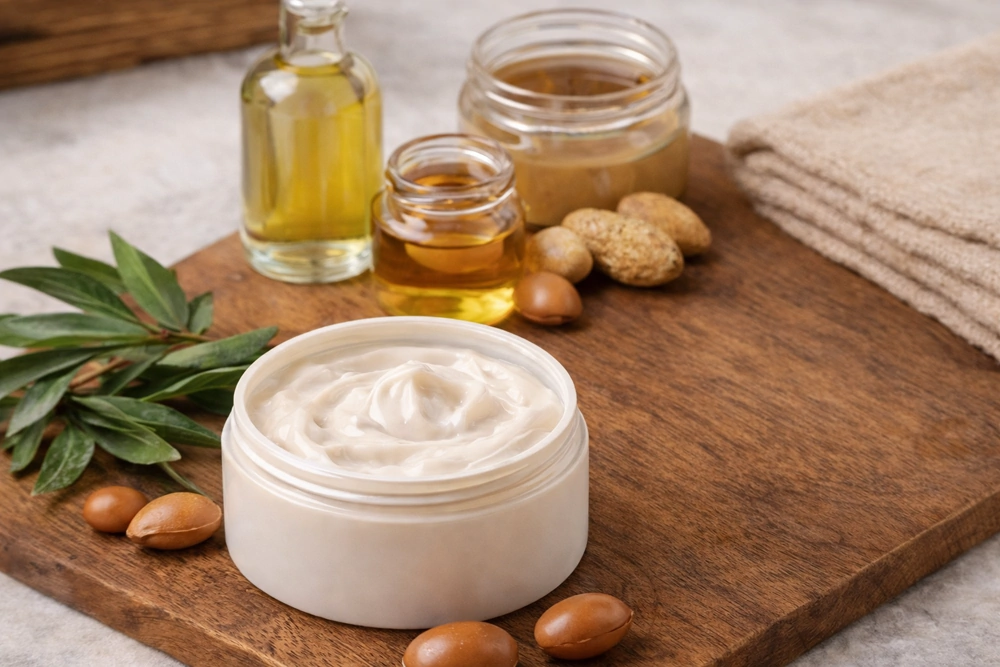
- plant oils or butters to help soften the lengths;
- humectants and conditioning agents;
- plant proteins when the hair is sensitized and responds well to them;
- detangling ingredients that can help reduce mechanical breakage.
Step 3: protect the lengths every day
A good dry hair routine does not depend only on the products used in the shower. The way you handle your hair between washes also matters.
- avoid rubbing the hair vigorously with a towel;
- detangle gradually, starting at the ends;
- limit very high temperatures;
- use heat protection when you regularly use a hair dryer, straightener or curling iron;
- protect your hair during prolonged exposure to sun, chlorine or seawater.
A small amount of hair oil or leave-in care can also be applied to the ends when they lack softness.
How often should you use a mask on dry hair?
There is no universal frequency. It depends on the mask formula, hair texture, level of sensitization and the other products used in your routine.
A weekly mask may suit some people, while others may only need one occasionally.
If your hair starts to feel heavy, dull or difficult to style, it may be helpful to use rich treatments less frequently or apply a smaller amount.
Dry hair and heated styling tools: what should you do?
Repeated heat exposure can make the lengths more fragile and dry, especially when very high temperatures are used.
If you regularly use heated styling tools:
- avoid maximum temperatures when they are not necessary;
- avoid repeatedly passing the tool over the same section of hair;
- use a suitable heat-protectant product;
- make sure the hair is completely dry before using a straightener or curling iron.
Common mistakes to avoid with dry hair
❌ Using too many very rich treatments
Using more product does not necessarily mean softer hair. A buildup of rich treatments can weigh down some hair types.
❌ Using only oils
Oils can improve the feel of the hair and soften the lengths, but they do not replace every other component of a hair care routine.
❌ Confusing dry hair with a dry scalp
It is perfectly possible to have oily roots and dry lengths. Shampoo should mainly be chosen according to the scalp, while treatments are more targeted towards the lengths.
❌ Using too much heat
Repeated exposure to high temperatures can make the hair fiber more fragile and make it harder to maintain soft, flexible lengths.
❌ Brushing tangled hair too aggressively
Mechanical detangling can cause breakage, especially when the hair is already sensitized. Start at the ends and work your way up gradually.
A simple routine for dry hair
When you are starting out, a routine does not need to include many products.
It can simply be based on:
- a gentle shampoo suited to the scalp;
- a conditioner or mask suited to the lengths;
- a protective or finishing treatment when needed.
At Natur’All Hair, the Serge d’Estel Paris plant-based keratin range can be one option for dry, sensitized or frizz-prone hair.

What if your dry hair is colored with plant-based hair color?
Hair colored with plant-based hair color can also have dry lengths depending on its natural texture, previous treatments and styling habits.
In this case, choose a routine based on the actual needs of your hair while selecting products that are compatible with your color.
You can also discover our selection of plant-based hair colors and our advice on maintaining plant-colored hair.
Natur’All Hair advice
When your hair is dry, do not automatically look for the richest possible product. Start by observing your scalp, your lengths and how your hair responds after each treatment.
If the lengths still feel rough, gradually introduce a more nourishing treatment. If they become heavy or dull, reduce the amount or frequency of richer products instead.
FAQ – Dry hair and natural hair care routine
What is a good routine for dry hair?
A simple routine can combine a shampoo suited to the scalp, a conditioner or mask for the lengths and, when needed, a protective treatment or finishing oil.
What is the difference between dry and dehydrated hair?
In cosmetic terminology, dry hair is often associated with a lack of lipids and softness, while “dehydrated” hair is generally used to describe a lack of water or difficulty retaining moisture. In practice, the two issues can overlap and may benefit from a routine combining different types of ingredients.
Do oils hydrate dry hair?
Oils do not add water to the hair. However, they can soften the hair fiber, improve the feel of the lengths and help limit moisture loss when used as part of a suitable routine.
How often should you wash dry hair?
There is no ideal washing frequency that suits everyone. It mainly depends on the scalp, lifestyle and products used. It is generally better to wash the hair when it needs it with a suitable shampoo.
Should you use a hair mask after every shampoo?
Not necessarily. It depends on the formula and your hair’s needs. A conditioner may be enough for some washes, while a mask can be used more occasionally when the lengths need richer care.
In summary
To care for dry hair, remember these key principles:
- Cleanse gently with a shampoo suited to your scalp.
- Adapt treatments to the lengths rather than automatically using multiple rich products.
- Limit heat and mechanical stress that can make the hair fiber more fragile.
- Observe how your hair changes so you can adjust the frequency and richness of your treatments.
Discover the Natur’All Hair selection of natural shampoos, conditioners, hair masks and hair oils & care to build a routine suited to your hair’s needs.
Comments
Write a comment